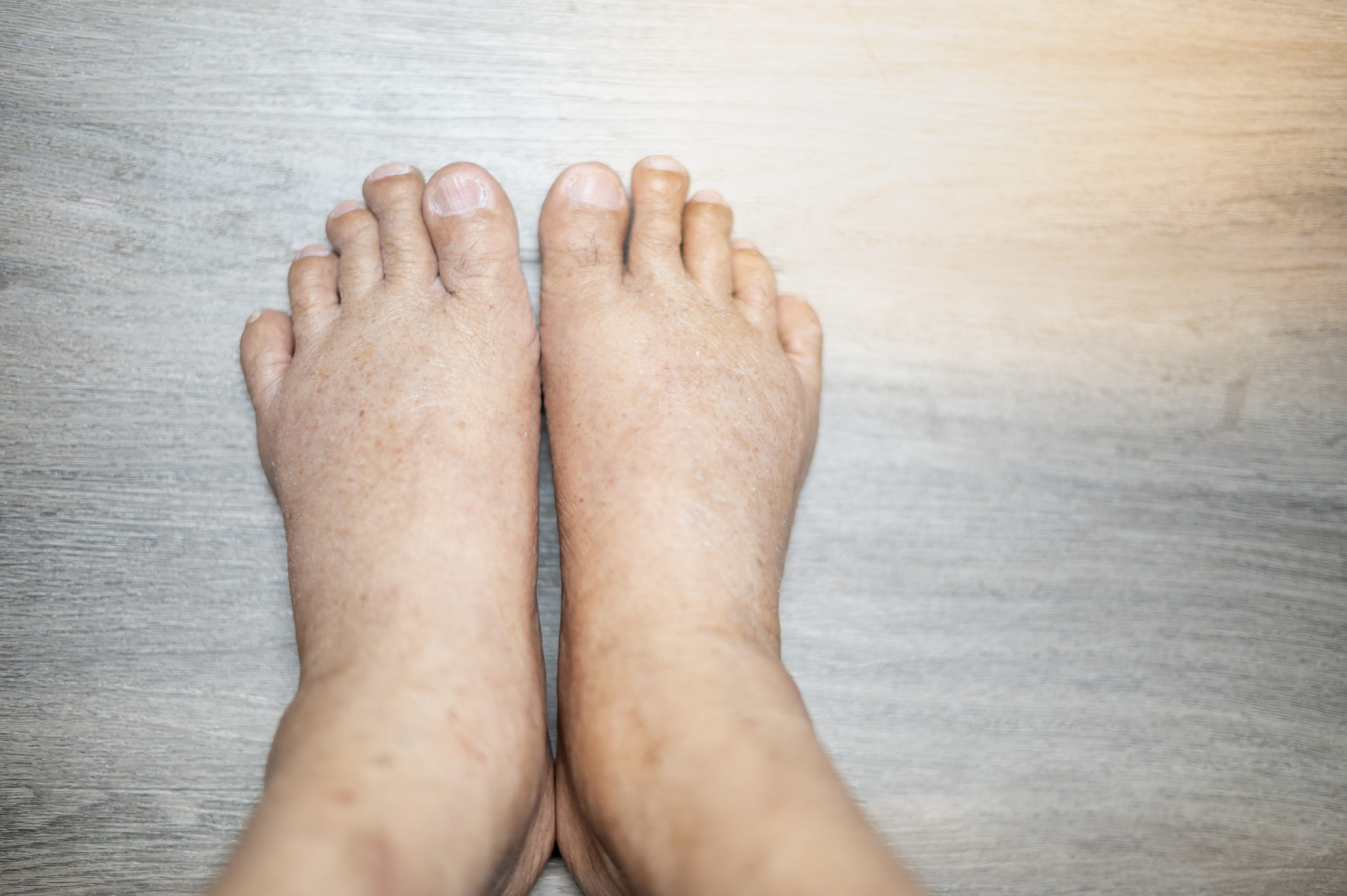
My feet and ankles swell by the end of the day. Is there anything I can do to reduce the swelling?
Swelling of the feet and ankles is common as people age, but it shouldn’t automatically be dismissed as “just getting older.” If you haven’t already discussed it with your medical provider, it’s important to do so. Swelling can sometimes signal an underlying problem such as heart, kidney, or liver disease; chronic venous insufficiency (when the leg veins don’t efficiently return blood to the heart); or, less commonly, a blood clot in the leg. Certain medications can also contribute to swelling, including some blood pressure medications such as amlodipine (Norvasc®) or verapamil (Calan®, Isoptin®). If a medication is playing a role, your provider may be able to adjust the dose or switch you to another drug.
If no serious underlying cause is found, there are several things you can do to reduce swelling and discomfort. Regular physical activity—especially walking—helps the leg muscles pump blood and fluid back toward the heart. Try not to sit or stand in one position for long periods. When resting, elevate your legs above the level of your heart if possible. Compression or support stockings may also help, although they need to fit properly to be effective and comfortable. Finally, pay attention to salt intake. Many people consume far more sodium than they realize, which can worsen fluid retention and swelling.
For more articles like this one, subscribe to my newsletter at www.focusonhealthyaging.com